

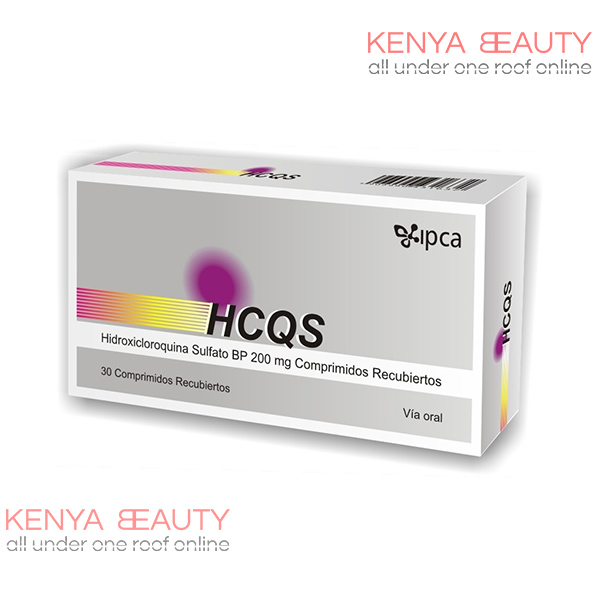
Hydroxchloroquine (plaquenil 200mg) 30’s
KSh 2,500.00 KSh 5,600.00
Hydroxychloroquine is a prescription medicine that belongs to a group of drugs called antimalarials. It is commonly used to treat and prevent malaria, a disease spread through mosquito bites that infects red blood cells. Doctors may prescribe it for prevention in areas where certain older treatments, like chloroquine, may not work effectively. However, it is not suitable for treating severe or complicated malaria cases.
Beyond malaria, hydroxychloroquine is also used to manage autoimmune conditions such as lupus—including both discoid lupus erythematosus (DLE) and systemic lupus erythematosus (SLE)—as well as rheumatoid arthritis. In these conditions, the medicine helps reduce inflammation and control symptoms.
It’s important to use hydroxychloroquine only under medical supervision. Taking it alone or together with certain medications, such as azithromycin, can increase the risk of serious heart rhythm problems, including QT prolongation and abnormal heartbeats. For this reason, you should never take any medication containing hydroxychloroquine unless it has been prescribed by your doctor.
Hydroxchloroquine is in the form of tablets. Initially used to prevent and cure malaria, hydroxychloroquine has been shown to be beneficial for autoimmune illnesses such as lupus. Although hydroxychloroquine’s exact mode of action is unknown, it is believed to disrupt immune system communication.


There are no reviews yet.