

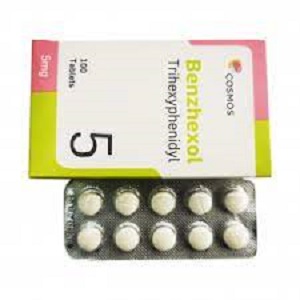
Benzhexol 5mg Tablets, Uses, Dosage and Side Effects Kenya
Trihexyphenidyl, also known as Benzhexol, is an anti-muscarinic muscle relaxant used as an antispasmodic medication for children’s drooling control and dystonia, a movement disease. Trihexyphenidyl (Benzhexol) lowers dystonic movements and relaxes stiff, dystonic muscles in people with dystonia.
Absorption: The medication is effectively absorbed from the digestive system. It starts working 60 minutes after an oral dose and reaches its peak activity two to three hours later. Benzhexol is usually taken with meals. An Anti-Muscarinic Muscle Relaxant
The antispasmodic medication benzhexol directly inhibits the parasympathetic nervous system. Additionally, it relaxes smooth muscle.
It is recommended for all types of Parkinsonism, including idiopathic, arteriosclerotic, and postencephalitic. It is frequently helpful as adjuvant therapy when levodopa is used to treat these types of Parkinsonism.
Benzhexol works well to lessen the tremors, excessive salivation, and stiffness of muscle spasms linked to Parkinsonism. It is also recommended that benzoyl be used to manage extrapyramidal illnesses, such as akathisia, which is characterized by severe restlessness, and dyskinesia, which is characterized by spastic contractions and involution.
The typical daily dosage for medication-induced Parkinsonism is 5–15 mg, while 1 mg is effective in certain circumstances. The dosage of Benexol should never be changed; instead, it should only be slightly adjusted over a few days. Initially, the recommended dosage for therapy should be 1 mg on day one, 2 mg on day two, and so on until the ideal dose is attained, with additional dose increments of 2 mg daily spaced three to five days apart. If patients are receiving therapy with other parasympathetic inhibitors already, benzhexol should be included back into the regimen. Levodopa and benzhexol may need to be taken at lower doses when taken together.



There are no reviews yet.